
TEMPLE AS TECHNOLOGYI
Egyptian temples may have been the most sophisticated psychological technology ever built.
If you’ve stood inside one and felt something shift —
you’re not imagining it.
What if that was the point?
A MASTERCLASS BY VANESE MCNEILL
THE STRANGE PATTERN
Across Egypt a remarkable pattern appears in stone: four temples, each designed to evoke a different human experience.
Luxor — authority
Dendera — ecstasy
Abydos — mortality
Karnak — power
Each uses architecture to produce that experience deliberately.
• temples aligned so sunlight strikes the sanctuary on specific days
• corridors deliberately narrowing to alter the body's perception of space
• massive courtyards that release compression in a burst of light
• processions that gradually shift psychological state
The strange part is that these effects are not metaphorical. They emerge directly from the architecture itself.
This series explores how Egyptian temples were designed to shape human consciousness.
In this masterclass you will explore ideas that change how Egypt is understood
• why Luxor may have functioned as a psychological reset for rulers
• how Dendera staged ritual ecstasy to prevent social hysteria
• why Abydos was designed to neutralize fear of death
• how Karnak made the Egyptian state feel eternal
• and why modern architecture rarely produces these effects anymore
This class approaches Egyptian temples as designed environments that shape perception and political authority.
We Lost the Reading Method
We were taught to see ruins.
We were trained to interpret reliefs and dates.
But we missed the real mechanism...
If you don’t know how to see that,
you miss the technology entirely.
Module I — Luxor
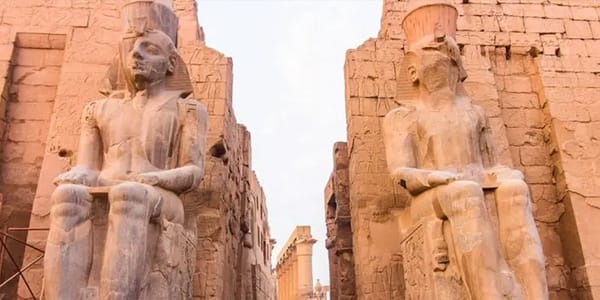
The Kingship Rebuild Chamber
What if Egypt built a structure specifically designed to prevent rulers from going mad?
Module II — Dendera
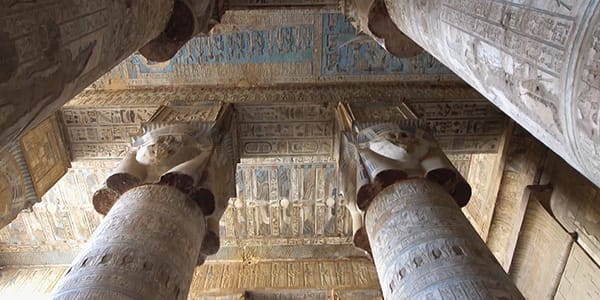
The Ecstasy Regulator
What if Egypt built a temple to prevent mass hysteria?
Module III — Abydos
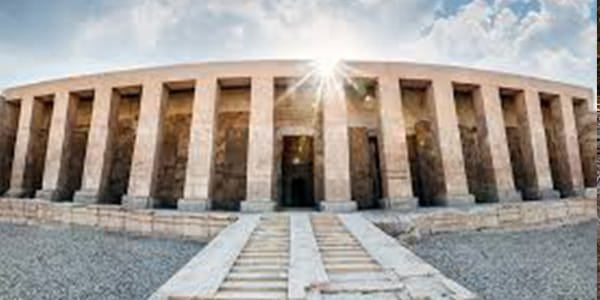
The Death Neutralizer
What if Egypt built a temple designed to neutralize the terror of death?
Module IV — Karnak
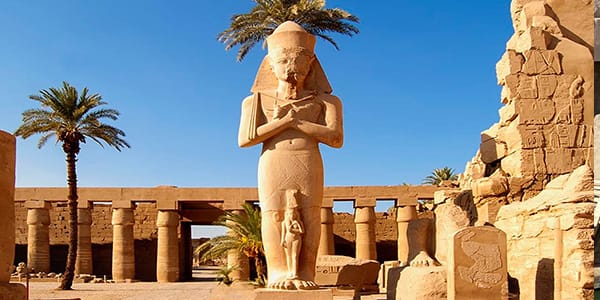
The Power Accumulator
What if Egypt built a temple designed to make power feel eternal?
What Changes for You
After this series you won’t just stand inside a temple.
You will understand what you’re looking at.
The next time you step into one, you will recognize the mechanism.
You will also see why modern structures — political, emotional, digital — feel destabilizing by comparison.
Egypt stops being mysterious.
It becomes operational.
You begin to see what the builders were doing.
We call them temples.
They may have been operating systems.
The Series Includes
Four structured modules — each devoted to a single temple engineered to govern a specific experience:
All sessions are recorded.
You will receive full access to the recordings and can revisit them at your own pace.
Who This is for
For travelers who sensed something was happening — and want to understand what.
For repeat visitors who know Egypt is more than reliefs and dates.
For independent thinkers who prefer internal logic over tour-guide narratives.
This is not checklist tourism.
It is orientation.
Done.
Anchored by Foundational Lectures
This series is supported by key Symposium lectures, including:
John Anthony West — Sacred Science and the Symbolist Mind
Christopher Dunn — Engineering the Impossible
Ed Nightingale — The Giza Template
Gary Osborn, Ike Rodriguez & Thomas Joseph Brown — The Djed, 23.5° and the Zodiac
These lectures provide the historical and symbolic groundwork upon which this architectural analysis rests.
TEMPLES AS TECHNOLOGY
Egypt does not reveal itself casually.
This is the lens required to see it.
If temples were consciousness technology,
the question is whether we still know how to build them.
ON DEMAND
Only $75
Stay Connected

Magical Egypt
Email: vanese@magicalegypt.com


Links
Home
Contact us
About us
Built with systeme.io
Terms | Privacy